Carnaby Street Christmas Lights Backlash: Sea of Phones Sparks ‘Black Mirror’ Debate

A video of the Carnaby Street Christmas lights switch-on has turned into one of the week’s most talked-about cultural moments in the UK, and the lights themselves are barely the point. BBC London posted footage of the switch-on on the evening of 4 November 2026, and thousands of commenters reacted to the same detail: hundreds of spectators watching the display through raised phones instead of with their own eyes.
The clip spread through the weekend, and by Monday 16 November “carnaby street christmas lights backlash” was trending in the United Kingdom with 50,000+ Google searches. The reaction says less about one street in London’s West End than about how people now feel about filming every moment instead of living inside it.
Quick Reference Summary
| Detail | What is confirmed |
|---|---|
| Event | Carnaby Street Christmas lights switch-on, London |
| Switch-on date | Evening of 4 November 2026 |
| Where the video appeared | BBC London on Instagram |
| What viewers reacted to | Crowds filming the lights and fireworks on phones |
| Searches | 50,000+ in the UK on 16 November 2026 |
| Loudest voice | Former EastEnders actress Natalie Cassidy |
| Expert quoted | Dr Kaitlyn Regehr, University College London and University of Toronto |
| Research cited | Dr Linda Henkel, “photo-taking-impairment effect”, 2014 |
| Organisers’ response | No public comment so far |
Carnaby Street Christmas Lights: A Switch-On Watched Through Screens
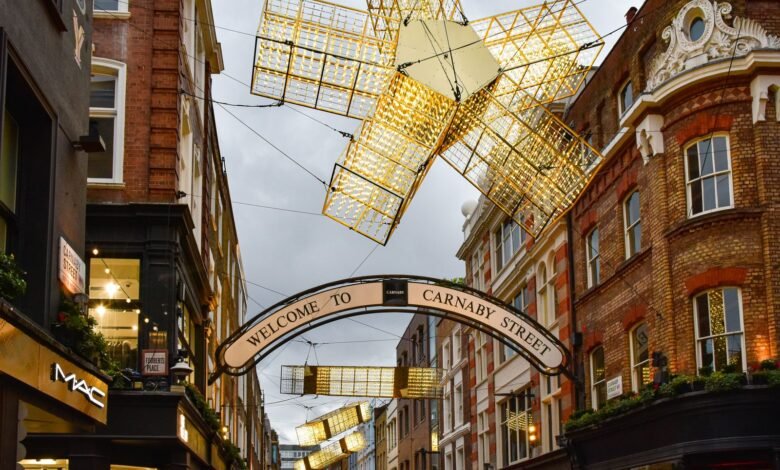
The footage itself is simple. The street’s 90s-themed display glows overhead, fireworks go off, and the crowd below holds up a wall of glowing rectangles. BBC London’s video, reported by Victoria Cook, drew thousands of comments within hours, and almost none of them were about the decorations.
One commenter wrote: “Remember when we used to look at stuff directly with our eyes? Those were the good old days.” Another called the scene “such a sad sad sight.” A third added: “Nice to see everyone living in the moment, there’s a 90% chance they will never watch the video again too.” The joke landed hardest of all: “Anyone manage to get a video of this?”
The Evening Standard reported that many comments likened the scene to Black Mirror, the dystopian series about technology warping everyday life. The comparison stuck because the image needed no caption: a crowd, a celebration, and almost nobody actually looking at it.
What Thousands of Commenters Actually Said
Former EastEnders actress Natalie Cassidy put the frustration in plain words on the post. “Why is this piece not mentioning the fact that no-one is looking through their eyes at this beautiful display? It’s really scary and depressing,” she wrote.
Her comment captured the tone of the thread. People were not arguing about whether the lights were good. They were arguing about whether a shared moment still counts when everyone in it is recording it for later. The M&S Christmas advert and the John Lewis Christmas advert have drawn the usual seasonal attention this year, yet neither sparked this kind of argument about how audiences behave. The Carnaby Street clip did, because the behaviour was the whole picture.
Why Filming Through a Phone Can Weaken Memory
The BBC report turned to research, and the science behind the complaints is older than the smartphone era’s current anxieties. Cognitive psychologist Dr Linda Henkel of Fairfield University tested the question in a 2014 study published in Psychological Science, leading undergraduates on a guided tour of the Bellarmine Museum of Art.
Henkel’s 2014 study found that students who photographed whole objects remembered fewer of them the next day, recalled fewer details, and were worse at remembering where objects had been, compared with students who had simply looked. She named the pattern the photo-taking-impairment effect. The camera, in her account, takes over the job of remembering, so the brain stops doing it.
There was a twist that matters for anyone at a switch-on this Christmas. When participants zoomed in to photograph one specific part of an object, the impairment disappeared. Choosing what to look at forced them to pay attention, and their memory held up. The problem, in other words, is not the phone. It is filming on autopilot.
The Wider Unease Behind the Anger
Dr Kaitlyn Regehr, who researches smartphones at University College London and the University of Toronto, told the BBC that the interesting part of the story is not the filming. “This is not the first year that people have attended events and watched those events through screens,” she said. “But what’s significant is that this year there’s a lot of critical public discourse happening. And that, I think, is really, really positive.”
Regehr said the comments “say a lot about where we are as a society at the moment” and showed “our discomfort with the amount of influence that big tech is playing on our lives”. She argued that the steady run of negative stories about phones and platforms is building “public understanding” and encouraging people to “want to take greater control over these technologies”.
She linked the mood to the UK’s planned social media ban for under-16s, due in March 2027, and to lawsuits against social media companies in the US. Christmas, she added, sharpens the feeling. “We, as millennial parents, have memory of Christmases prior to smartphones,” she said, and parents are now “becoming really uncomfortable with the hold through which technology has on their families’ lives.”
Oxford Street Chose the Opposite Approach
The contrast with Oxford Street, a short walk away, shows how differently the same habit can be framed. At the Oxford Street switch-on, organisers encouraged spectators to hold up their phone torches as part of the display, turning the devices into the show rather than a barrier to it.
Nobody at Carnaby Street asked the crowd to put phones away, and nobody needed to. The crowd filmed because that is what crowds do now. The backlash came afterwards, from people watching the video at home and recognising their own habits in it.
What Happens Next on Carnaby Street
Carnaby Street’s organisers have not commented publicly on the reaction, and there is no sign of any change to the display. The lights stay up, the crowds keep coming, and the 90s-themed installation will run through the Christmas season.
The argument, though, is unlikely to fade with this one video. Every switch-on, concert and fireworks night this winter will produce the same image, and the same question will follow it: whether the recording is worth the moment it replaces. For now, the crowd on Carnaby Street has given the debate its sharpest picture yet, and thousands of people have already decided what they think of it.
Frequently Asked Questions
When was the Carnaby Street Christmas lights switch-on in 2026?
The switch-on took place on the evening of 4 November 2026 in London’s West End, with hundreds of people attending, according to the Evening Standard.
Why are people angry about the Carnaby Street lights video?
The anger is aimed at the crowd, not the lights. BBC London’s video showed hundreds of spectators filming the display and fireworks on their phones, and thousands of commenters said people should have watched it with their own eyes.
What did Natalie Cassidy say about the Carnaby Street lights?
The former EastEnders actress commented that nobody seemed to be looking at the display through their own eyes, calling the scene “really scary and depressing”.
Does filming an event really affect your memory?
Research suggests it can. Dr Linda Henkel’s 2014 study found that photographing whole objects on a museum tour led people to remember fewer of them, and fewer details, the next day. Zooming in on one detail removed the effect, because it forced closer attention.
What is the theme of the Carnaby Street Christmas lights in 2026?
Reports describe this year’s display as 90s-themed. The backlash has focused on the crowd’s phone use rather than the design of the lights.